Blog
MCC 7995: why your bank declines a legal deposit
Updated We read the operator paperwork
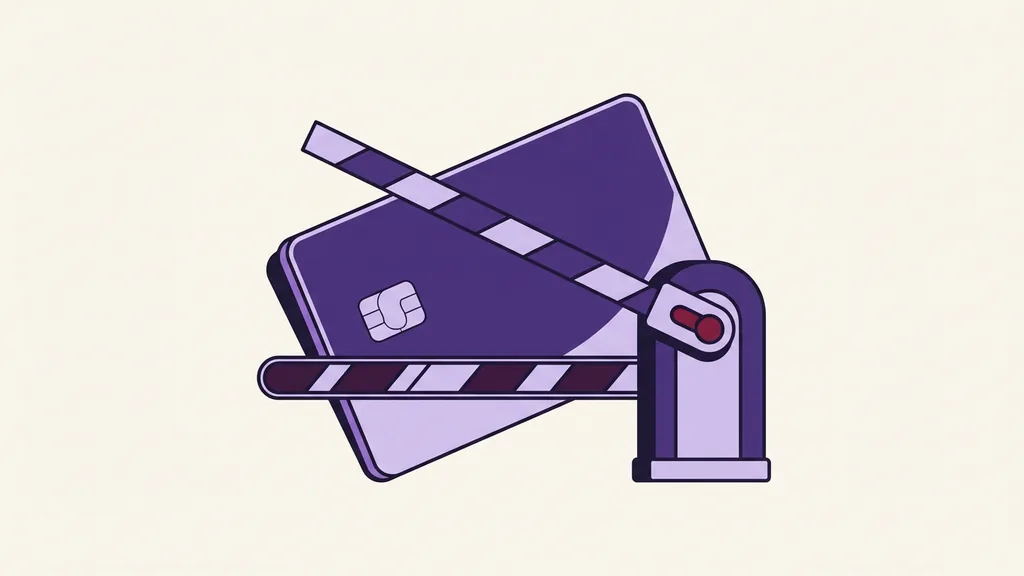
A deposit fails at a state-licensed casino, the site shows a generic error, and the player concludes the operator has a problem. In most cases the operator never got the chance to approve anything. The transaction carried a four-digit code that told the card issuer what kind of merchant it was going to, and the issuer said no.
On this page4 sections
21+. Play only where your state regulator allows it. We take a commission from some operators; it never moves a room up the list. Gambling problem? Call the National Problem Gambling Helpline, 1-800-MY-RESET (1-800-697-3738).
The code
Every card transaction is tagged with a merchant category code describing the merchant’s business. The code used for gambling merchants is 7995 — in the card networks’ own descriptions, betting, including lottery tickets, casino gaming chips, off-track betting and wagers at race tracks.
Two things flow from the tag, and they are decided by different parties.
Whether the transaction is allowed at all. Your issuing bank sets its own policy on 7995. Some banks permit it, some block it outright, some permit it on credit but not debit, and some allow the customer to toggle it in the app. None of this is set by the gambling site, and none of it depends on whether the site is licensed in your state — a bank that blocks the category blocks it for the legal operator and the offshore one alike.
How the transaction is priced. Because a gambling deposit converts money into a balance that can be withdrawn, many issuers treat 7995 as quasi-cash and process it on cash-advance terms rather than as a purchase. On a credit card that usually means a fee at the time of the transaction and interest that begins accruing immediately, with no grace period, and it does not earn rewards.
Why a licensed operator cannot fix it for you
The operator’s acquirer assigns the code according to the business, and the operator cannot reassign itself into a different category — doing so deliberately is transaction laundering and is one of the few things that gets a payments relationship terminated outright. So when a site says "please try another payment method", it is not deflecting. It has no lever on your issuer’s category policy.
What the operator can do, and what the better ones do, is offer funding routes that do not travel as 7995 from your bank’s point of view: bank transfer and ACH, the operator’s own prepaid card, a cash deposit at the affiliated land-based property, a branded wallet, or one of the pay-by-bank apps. Those move the category decision away from your card issuer entirely.
The decline causes worth checking, in order
Not every refused deposit is the category code. Work through these before assuming it is:
- Card type. Credit blocked but debit allowed is a common bank policy, and so is the reverse. Try the other one before anything else.
- Issuer app toggle. Several banks now expose a gambling-transactions switch in the app, sometimes with a cooling-off delay of a day or more once it has been turned off.
- Address and name mismatch. The billing address and cardholder name have to match the verified account. Payments in these markets are checked against the identity on the account, which is also why a third-party card will be refused — see source of funds versus source of wealth.
- Prepaid and gift cards. Generally excluded by operator terms rather than by the bank.
- 3-D Secure. An authentication step that times out or lands in an app you did not open reads as a decline on the site.
- Location. A deposit attempt from outside the licensed state can fail before the payment stage at all; that mechanism is geolocation at the state line.
- Self-exclusion. An enrolled player’s deposits are refused by design, and the refusal is not always labelled as such. The lists are state-specific and multiple; see self-exclusion is not one list.
The asymmetry nobody warns you about
Deposits and withdrawals do not travel the same road. A card deposit is an authorisation; a withdrawal back to the same card is a separate operation that some issuers do not support, which is how a player ends up with a withdrawal routed to a bank transfer they never set up. Operator terms usually require the withdrawal to return to the funding source where possible, so the practical move is to choose a funding method you can also be paid on — before the first deposit rather than after the first win.
For what happens to the money once it is in play, see playthrough, rollover, wagering; for the paperwork at the other end, the $2,000 W-2G threshold.
Banking options by brand and state are on the payments hub, with the licensed operator lists on the state index and the casino hub.
Where this belongs on the site
The standing pages behind this post.
 The Naughty Poker blog
What changed this week in US online poker and casino play, and the long reads that go behind it. 21+.
BlogOpen Neteller Online Gambling Sites
Neteller is one of the most reliable options to fund an account at New Jersey online casinos and poker sites in 2026.
DepositsOpen Cryptocurrency Poker Sites
Players around the world can use cryptocurrencies instead of fiat currency to play online poker. Use bitcoin…
DepositsOpen