Blog
The 83% floor and the jackpot hiding inside it
Updated We read the operator paperwork
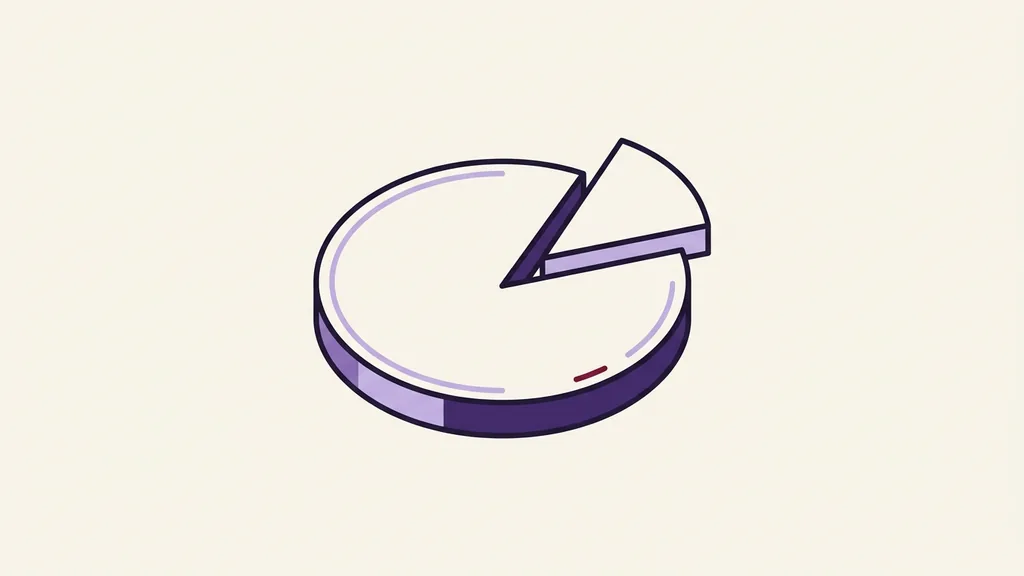
Two numbers govern the honesty of a slot in a regulated US market: the minimum return the regulator will approve, and the share of that return which is parked in a jackpot you will almost certainly not win. Players read the second number as a bonus on top of the first. It is a slice out of it.
On this page5 sections
21+. Play only where your state regulator allows it. We take a commission from some operators; it never moves a room up the list. Gambling problem? Call the National Problem Gambling Helpline, 1-800-MY-RESET (1-800-697-3738).
What the regulations actually set
New Jersey’s slot standard, N.J.A.C. 13:69E-1.28A, requires at subsection (a) that a slot machine have a theoretical payout percentage of at least 83 percent, computed over the life of the machine. Pennsylvania sets its own floor in 58 Pa. Code § 461a.7, which requires a minimum theoretical payout of 85 percent for slot machines on the gaming floor.
Three words in the New Jersey formulation do most of the work.
Theoretical. The figure is a property of the game’s mathematics as submitted and approved, not a measurement of what the machine has paid.
Payout percentage. It is the proportion of amounts wagered that is returned as prizes, across all the prizes the game can award.
Over the life of the machine. The horizon is the device’s entire operating history, which is millions of plays. Nothing in the standard promises anything about a day, a session or ten thousand spins.
Where the jackpot money comes from
A progressive jackpot is funded by a contribution taken from each qualifying wager — typically a small percentage of the stake — which accumulates on top of a seeded starting value until someone wins it. Industry material on jackpot design notes that this contribution is normally already inside the game’s advertised return figure rather than added to it.
Follow that through and the consequence is arithmetic, not opinion. If a game quotes a return of 95 percent and two of those points are the jackpot contribution, then the part of the return you can realistically expect to experience — the paytable wins that land during an ordinary session — is running at about 93 percent. The missing two points are real money being returned, to one player, once.
Why that makes a progressive feel worse than its number
A fixed-paytable slot distributes its return across many small and medium outcomes. A progressive takes a slice of the same budget and concentrates it into one outcome with a very long tail. Two games at an identical theoretical return will therefore produce completely different sessions: the progressive is colder, by design, by exactly the amount sitting in the pot.
That is not a defect and it is not a trick. It is the price of the lottery that is bolted onto the machine, and it is paid by every spin including the ones that never qualify for the jackpot.
The clause that decides whether your spin was in the draw
Eligibility sits in the game’s rules rather than the regulation, and it is where the structure most often disappoints:
- Minimum qualifying bet. Many progressives require a stake at or above a threshold. Below it, the spin still pays the contribution’s share of a thinner base game but cannot win the pot.
- Stake-proportional chances. On some designs the trigger probability scales with the bet, so a minimum-stake spin is eligible but weighted down.
- Bonus funds. Wagering-requirement terms frequently exclude jackpot play; see playthrough, rollover, wagering.
- Which build you are on. The jackpot belongs to a specific approved configuration of a title. Another site’s copy of the same game may have no jackpot and a different return.
The New Jersey standard also requires that the rules of play, including related pays, give fair notice, and it prohibits displaying a jackpot that could be won only by consecutively activating free play awards — in other words a top prize has to be reachable by a paying player. That is the regulatory backstop behind the help screen, and it is the reason the eligibility conditions have to be written down somewhere you can read them.
How to use the floor as a player
The floor is a filter for markets, not for games. In a state with a licensed online casino, every slot you can load has been approved against a published minimum and has a regulator you can complain to about a malfunction. In an unlicensed or offshore product, no such number exists and no such complaint route does either, and that is the practical difference between the two kinds of product.
Within a licensed market, the two numbers to write down before playing a progressive are the quoted return and whether it includes the contribution. Everything else on the screen — the ways count, the maximum multiplier, the drop timer — carries arithmetic of its own.
Where the rest of the screen is read:
- 117,649 ways — a ways count next to a payline count.
- What a 5,000x cap means — the maximum multiplier.
- Must-drop jackpots — what the timer does and does not promise.
- Malfunction voids all pays — the clause behind a withdrawn win.
- Gold coins and sweeps coins — the offshore comparison in full.
- Licensed brands by state: casino hub, New Jersey, Pennsylvania.
Where this belongs on the site
The standing pages behind this post.
 The Naughty Poker blog
What changed this week in US online poker and casino play, and the long reads that go behind it. 21+.
BlogOpen Caesars Casino Promo Code
Use Caesars Casino Promo Code FREECZR for our exclusive $2,000 deposit match bonus in Michigan, WV. Use PLAYBONUS in…
CasinosOpen Mobile Casino Apps &
Mobile casino apps are available everywhere in the US. Delaware, New Jersey, Pennsylvania, West Virginia and Michigan…
CasinosOpen Live Dealer Casinos in USA
Find the best USA online casinos for live dealer games, including blackjack, roulette and more. Enjoy a real casino…
CasinosOpen Connecticut Online Casinos
Connecticut online casinos officially launched on October 19, 2025. Find the best online casino bonuses and get the…
CasinosOpen No Deposit Bonus Casinos
No deposit bonuses are casino promotions which you get just by signing up. You can play real money online casino…
CasinosOpen